
Johor Is Not Building a Factory. It Is Building the Brain.
Microsoft, Oracle, ByteDance, and NVIDIA chose Johor over every other Southeast Asian alternative. The reason is physics, not policy — and it has implications that go far beyond data centres.

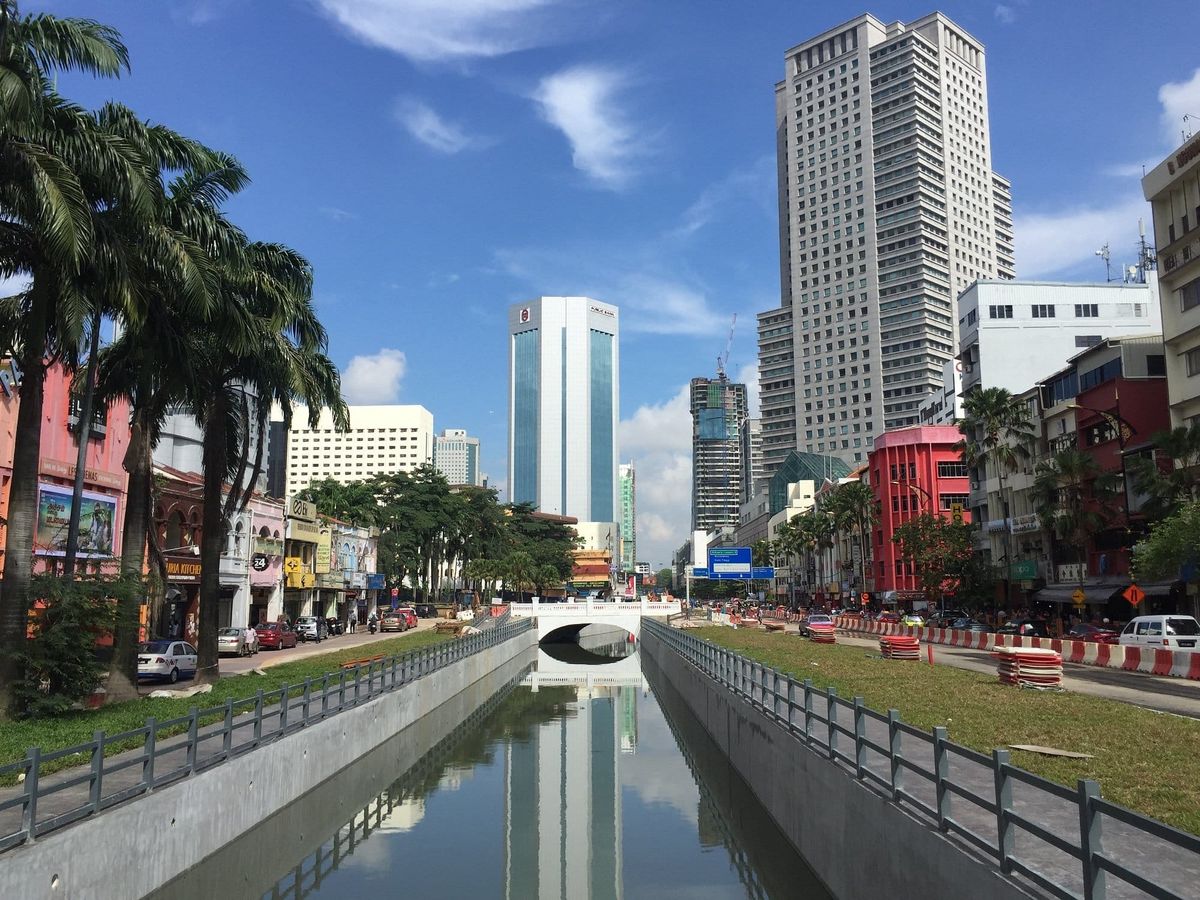
The official comparison has always been Shenzhen. Johor as a manufacturing hub, a supply chain node, a cheaper place to make things that Singapore no longer has space to make. That narrative was always partially wrong. The data now makes it obsolete.
What is being built in Johor is not a factory. It is a brain.
The numbers are not subtle. Johor now has 1.4 gigawatts of data centre power capacity — equal to Singapore, a market that took fifteen years to reach that level. Johor got there in under two years. Knight Frank ranked Malaysia the world's hottest data centre investment destination in both 2023 and 2024. In the second quarter of 2025 alone, Johor approved 42 new data centre construction projects in a single quarter.
These are not warehouses with servers in them. These are the physical infrastructure of the global digital economy.
The Companies and What They Signal
Microsoft has committed USD 2.2 billion to Malaysia, including multiple hyperscale facilities in Johor. Oracle followed with USD 6.5 billion — its first Malaysian public cloud region, sized to run up to 131,072 NVIDIA Blackwell GPUs. ByteDance is investing USD 2.1 billion in regional infrastructure with significant Johor components. NVIDIA, Equinix, AirTrunk, GDS International, Princeton Digital Group, YTL Power — the list of operators now present in Johor reads like a directory of global digital infrastructure.
Each of these companies did due diligence. Each chose Johor over alternatives in Thailand, Vietnam, Indonesia, and the Philippines. That choice was not random.
Why Johor Specifically — The Physics of the Decision
For high-frequency trading, algorithmic finance, and real-time AI inference, latency is not a preference. It is a hard constraint. A data centre processing equity orders or derivatives positions cannot afford the latency of being in Bangkok or Jakarta. It needs to be within microseconds of Singapore's financial infrastructure — the region's primary hub for foreign exchange, equity markets, and derivatives clearing.
Johor sits across a 1-kilometre strait from Singapore. The current fibre latency between Johor Bahru and Singapore's financial district is under 5 milliseconds. No other location in Southeast Asia can match this. You cannot solve a geography problem with money. You cannot buy proximity.
Singapore itself confirmed Johor's role when it imposed a data centre moratorium in 2019 due to power and water constraints. The city-state effectively told the market: we cannot grow here anymore, look next door. The market looked. What it found was 3,500 square kilometres of available land, electricity at USD 0.10 per kilowatt-hour versus Singapore's USD 0.27, stable politics, and a causeway that takes thirty minutes to cross.
The result is a natural division of labour that neither government manufactured but both are now codifying through the JS-SEZ: Singapore provides the legal and financial infrastructure, the headquarters, the talent, the global connectivity. Johor provides the computing infrastructure, the physical capacity, the land, the power.
This is not competition. It is integration. And integration at this scale, between two governments that have formalised it in a binding bilateral agreement, is extremely difficult for any other location to replicate.
The Infrastructure Behind the Infrastructure
Water. Electricity. Land. These are the three inputs that constrain data centre development globally. Singapore ran out of all three simultaneously and had to pause development entirely. Johor has abundance in all three. Tenaga Nasional Berhad has committed RM 42.8 billion in grid upgrades through 2027 specifically to support this demand. Johor's pipeline — currently 3.4 gigawatts in early-stage projects — is the largest in Southeast Asia.
The scale of that pipeline matters because data centres are not temporary. A hyperscale facility has an operational lifespan of twenty to thirty years. When Microsoft or Oracle breaks ground in Johor, they are making a multi-decade commitment. They are telling their shareholders, and by extension the global investment community, that Johor is stable, reliable, and scalable for the next generation of digital infrastructure.
That is not a small signal. That is the most credible form of endorsement that exists.
The Part That Gets Missed
The conversation about Johor's data centre boom tends to focus on the investment numbers. The deeper story is what those investments mean structurally.
Johor is positioning itself not just as a data centre location but as the physical layer of Southeast Asia's digital economy. The region's cloud computing, AI inference, financial transactions, streaming infrastructure, and sovereign data requirements will run through facilities being built in Johor right now.
That is not a Shenzhen story. Shenzhen makes things. What Johor is building processes everything — the transactions, the calculations, the decisions, the intelligence. In the digital economy, the entity that controls the processing infrastructure holds a form of strategic leverage that manufacturing capacity simply does not confer.
Johor's government understands this. The designation of Ibrahim Technopolis in Kulai, Sedenak, and Pasir Gudang as priority zones for data centre development within the JS-SEZ is not accidental industrial policy. It is the deliberate construction of a digital geography that will compound in value for decades.
The Shenzhen comparison was always a ceiling. What is being built here has no obvious ceiling yet.