
Johor Bahru in 2026: The Case for Taiwanese, Japanese, and American Remote Workers
No earthquakes. No typhoons. Full AI access. Singapore five minutes away at 30% of the cost. The case for Johor Bahru as the most underrated base in Asia for remote workers from Taiwan, Japan, and the United States.

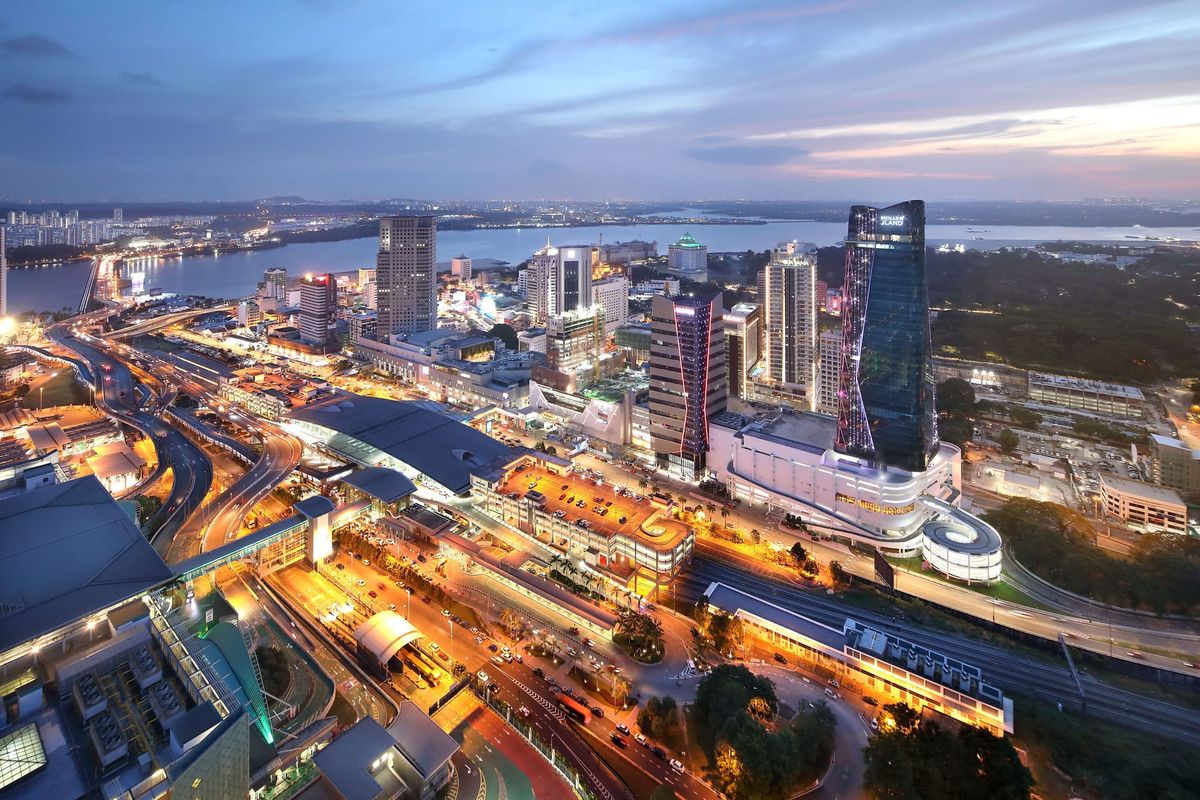
Every few months, a list circulates about the best cities for digital nomads. Lisbon, Chiang Mai, Bali, Bangkok, Mexico City. Johor Bahru is not on any of those lists.
It should be at the top.
JB in 2026 is not the city it was five years ago. The Johor-Singapore Special Economic Zone, the data centre build-out, the Forest City Special Financial Zone, the RTS Link approaching completion — these are not future promises. They are present infrastructure. For a Taiwanese professional, a Japanese remote worker, or an American founder doing serious due diligence on where to base themselves in Asia, Johor Bahru is increasingly the answer that the research produces.
Here is the case, made specifically for each audience — with honest comparisons to the cities they are currently considering.
No Earthquakes. No Typhoons. No Volcanoes.
Start with the things money cannot fix.
Japan experiences roughly 1,500 earthquakes per year strong enough to be felt. Taiwan sits on multiple fault lines and takes direct typhoon hits several times annually. The Philippines, Indonesia, and much of Southeast Asia share similar seismic and storm exposure. The western United States combines earthquake risk with wildfire seasons that grow longer every year.
Johor has none of this. The Malay Peninsula sits outside the primary typhoon belt. Sumatra absorbs Indian Ocean tsunamis before they reach Johor's coast. The state has not recorded a significant earthquake or direct typhoon strike in modern history. This is geography — and geography does not change governments.
For Japanese professionals, this argument lands with unusual force. Japan's earthquake culture runs deep — the drills, the emergency kits, the building codes, the psychological weight of living somewhere that shakes. Johor is the closest major city in Asia to Singapore that simply does not have this problem. Among the Japanese community already living in JB, this single factor comes up consistently as the primary reason for the move.
Full AI Access. No VPN Required.
For anyone working in technology, research, content creation, or finance in 2026, access to the full AI stack is a professional requirement. OpenAI, Anthropic, Google, Perplexity — these services are blocked or restricted across much of Asia.
Malaysia has no restrictions on AI tools. In Johor Bahru, every major AI platform works natively, at full speed, without a VPN. For Taiwanese and American professionals accustomed to unrestricted access, this is invisible — until they try to work from somewhere that does not have it.
Remote workers and founders who depend on AI tools will not choose a base that makes those tools slower or legally complicated to use. This is a filtering criterion that Johor passes cleanly and most of Asia does not.
Singapore Next Door — At Malaysian Prices
This is the argument that has no equivalent anywhere else in Asia.
Singapore is the region's premier hub for finance, legal services, international headquarters, and premium lifestyle infrastructure. It is also one of the most expensive cities on earth. A one-bedroom apartment in central Singapore: SGD 4,000 to 6,000 per month. Comparable quality in Johor Bahru: USD 500 to 800. The cost of living in JB is roughly 30% of Singapore's.
The Johor Bahru–Singapore RTS Link, opening by end-2026, will connect the two cities in five minutes. From your apartment in JB, you walk to a train, clear immigration through AI-powered e-gates, and reach Singapore's central business district in under twenty minutes. The commute from many Singapore neighbourhoods to the CBD takes longer than that.
For Americans: think of it as living in a low-cost suburb with a five-minute train to Manhattan — except the suburb has better food, year-round 28°C weather, and no property tax.
For Taiwanese: the flight from JB to Taipei is roughly four hours. Singapore Changi — forty minutes away by road — connects to 100 countries. The regional travel infrastructure from JB, via Changi, is arguably better than from Taipei for Southeast Asian destinations.
For Japanese: Tokyo and Osaka are four to five hours by direct flight from JB or via Changi. The Japanese community in Johor is established and growing — Japanese restaurants, Japanese supermarkets, Japanese-language services. No earthquakes, low cost of living, Singapore proximity: JB has become one of the most popular Malaysia remote-work and retirement destinations for Japanese nationals.
Political Stability With a Track Record
Malaysia has been stable since independence in 1957. Johor has an additional layer: a royal institution with continuous presence since the 19th century, a Regent deeply invested in the state's development, and a bilateral relationship with Singapore that both governments have structural interest in maintaining.
Dubai is frequently cited as a comparable destination. Dubai has excellent infrastructure and is generally safe. It is also located in a region with active military conflicts within a few hundred kilometres, with no path to citizenship and demonstrated willingness to freeze assets in political disputes.
Johor has none of these risks. Malaysia has an independent judiciary, a functioning parliamentary system, and decades of consistent rule of law for foreign residents. The 5% JS-SEZ corporate tax rate and 15% personal income tax for knowledge workers are gazetted law with a ten-year application window — not ministerial promises.
The Practical Numbers
What life in Johor Bahru actually costs in 2026: a well-appointed one-bedroom apartment in the city centre runs USD 400 to 700 per month. A three-bedroom family apartment: USD 700 to 1,200. A meal at a good local restaurant: USD 4 to 8. Monthly grocery budget for one person: USD 200 to 350.
Compare this to the cities most commonly considered by the same demographic: Singapore (3x to 5x higher across the board), Tokyo (2x to 3x higher), Taipei (1.5x to 2x higher), Lisbon (similar cost but without Singapore next door), Bali (comparable cost but no financial infrastructure and limited serious co-working).
The Forest City Special Financial Zone adds a further layer for those considering longer-term residence: 0% tax for family offices, 15% personal income tax for knowledge workers, and a 10 to 20-year residency visa available to remote professionals with an entry cost under SGD 300,000 for Singaporean applicants.
The Honest Caveats — And Why Most of Them Have Expiry Dates
Johor Bahru in 2026 is not a finished product. Traffic congestion at the Causeway and within the city is real. If you are driving to Singapore daily today, the queues are a genuine daily cost — sometimes an hour or more at peak hours.
This caveat has a specific end date. The RTS Link, opening by January 2027, is designed to carry 10,000 passengers per hour in each direction — up to 40,000 daily commuters at launch, with long-term projections of 140,000 per day. That is 30 to 40 percent of current Causeway traffic shifted onto a single five-minute rail link. No traffic solution anywhere in the world is this mathematically targeted. The congestion problem is not being managed — it is being structurally removed.
Seasonal haze from regional agricultural burning affects air quality in parts of Southeast Asia for several weeks per year, typically between July and October. This is a genuine nuisance. For Taiwanese professionals accustomed to the seasonal impacts of Mongolian dust storms sweeping across China and arriving in Taiwan with particulate readings that close schools for days, or for Japanese professionals living with the annual Yellow Sand (Kosa) season blowing from the Gobi Desert — Johor's seasonal haze is comparable in duration and meaningfully better in intensity and frequency. It is also a regional phenomenon, not unique to Johor, and affects Malaysia far less than it affects Singapore in most years.
Healthcare is good by regional standards but does not match Singapore's top-tier private hospitals, which are accessible within thirty minutes. The public transport network outside the future RTS Link is limited. These are the caveats of a city in rapid transition. The trajectory is clearly upward.
The Window
The JS-SEZ's preferential tax rates run from 2025 through 2034. The RTS Link opens by end-2026. The data centre infrastructure is being built now. The family office and knowledge worker visa structures are live.
The people who established themselves in Lisbon before the digital nomad boom, in Bali before the infrastructure improved, in Dubai before the financial infrastructure arrived — they made decisions that looked early at the time and obvious in retrospect.
Johor Bahru is at that moment.