
Forest City Was Not Built Too Early. The World Is Just Catching Up.
The 'ghost city' narrative about Forest City is frozen in 2019. The situation in 2026 — a 0% family office tax zone, 35 million digital nomads looking for a base, and Singapore running out of space next door — is a different story entirely.

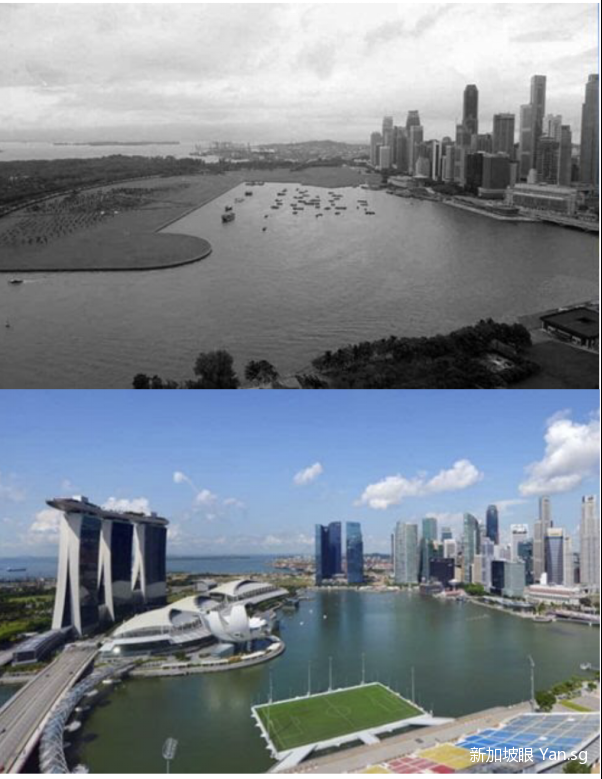
In 2001, when Dubai announced Palm Jumeirah, the international reaction was derision. Building a palm-shaped island in the desert, selling luxury apartments to people who had never heard of Dubai, at prices that made no sense relative to the surrounding market. Twenty-five years later, Palm Jumeirah commands USD 30,000 per square metre.
Forest City is at the derision stage.
The 'ghost city' narrative is real in the sense that occupancy rates remain in the low single digits across roughly 28,000 completed units. Country Garden's financial collapse added a layer of genuine uncertainty about what gets built next. The criticism is not wrong about the present. It is wrong about what the present means.
The Taiwan Freeway Comparison
When Taiwan's National Freeway No. 1 was built — a north-south expressway stretching the length of the island with six to eight lanes — the public reaction was scepticism bordering on ridicule. In a country where most roads were single-lane, where the largest urban streets had two lanes at most, the idea of an eight-lane highway seemed absurd. Critics said the road would not be fully utilised within fifty years.
Taiwan's economy did not wait fifty years. Within a decade of the freeway's completion, it was at capacity. A second parallel freeway had to be built before most people had adjusted to the existence of the first.
Infrastructure is not built for the economy that exists. It is built for the economy that is coming. The people who build it correctly are called visionary after the fact. Before the fact, they are called wasteful.

What Forest City Actually Is Now
The 'ghost city' framing is frozen in 2019. The situation in 2026 is materially different.
On 20 September 2024, Malaysia's Finance Minister launched the Forest City Special Financial Zone — a designation that changes Forest City's legal and tax status entirely. The SFZ offers a 0% corporate tax rate for Single Family Offices, a 15% personal income tax rate for knowledge workers (versus Singapore's 22% top rate and Hong Kong's 17%), and a 5% concessionary rate for fintech and global financial services companies. These are not aspirational targets. They are gazetted law, effective from 1 September 2024 through 31 December 2034.
As of 2025, more than 30 local and international investors have expressed interest in establishing family offices in Forest City under the SFZ scheme. The MM2H visa structure for Forest City offers 10 to 20-year residency passes specifically designed for digital nomads, remote workers, fintech professionals, and high-net-worth individuals. A Singaporean applicant can qualify for the SFZ MM2H with a total investment under SGD 300,000.
The Geography That Cannot Be Replicated
Forest City sits at the southwestern tip of Johor, directly adjacent to the Strait of Johor. It is 40 minutes by road from Singapore's Changi Airport. It is within the 5-millisecond latency corridor that makes it viable for financial transaction processing and high-frequency trading infrastructure — the same geographic argument that is driving USD 10 billion in data centre investment into greater Johor Bahru.
Singapore ran out of space. It imposed a data centre moratorium. It ran out of affordable housing for its own workforce. It cannot expand its land area in any meaningful direction except north — which is Johor.
Forest City is already north.
The Digital Nomad Market That Did Not Exist When Forest City Was Designed
Forest City was conceived in 2006 and launched in 2016. The global digital nomad economy — remote-first workers who can live anywhere with a reliable internet connection — was negligible in 2016. By 2025, estimates put the global population of location-independent knowledge workers at over 35 million, growing at 22% annually.
Forest City, properly understood, is arguably the most purpose-built digital nomad infrastructure in Southeast Asia: completed apartments available immediately, international schools already operating (Raffles American School, Marlborough College Malaysia, University of Reading Malaysia), a golf resort, duty-free retail, and a fixed deposit requirement of USD 65,000 for a 10-year residency visa — lower than equivalent schemes in Portugal, Greece, or the UAE.
The product exists. The market has grown to fit it. The gap between them is closing.
What the Critics Are Actually Saying
The 'ghost city' criticism contains a real concern: that Forest City was built for a Chinese buyer demographic that no longer exists in the same form, that Country Garden's financial distress has created genuine uncertainty about completion of the remaining three islands, and that the environmental cost of the reclamation was significant and irreversible.
These are legitimate observations. They are observations about the past and about construction risk. They are not observations about whether the infrastructure that already exists — 28,000 completed units, international schools, a hotel, a mall, a golf course, 30 square kilometres of reclaimed land with completed roads and utilities, a 0% family office tax regime, and a 10-20 year residency visa structure — has value in 2026.
The building is built. The question is who moves in.
The Answer Is Already Arriving
GG56 Korea has committed USD 1 billion to develop Malaysia's first K-Culture Town in Forest City. The JS-SEZ designation has added Forest City to the nine flagship development zones with preferential tax treatment. The SFZ's family office scheme drew over 30 investor expressions of interest within its first year of operation.
These are not the numbers of a project that has failed. They are the numbers of a project that was built a decade before its market arrived — and is now watching that market arrive.
The Taiwan freeway was not built too wide. The economy grew to fill it.
Forest City was not built too early. The world is just catching up.