
The Dubai of Asia Is Not Where You Think
While the world debated Southeast Asia's next hub, Johor quietly assembled every asset Dubai spent decades building — and added the one thing Dubai will never have.

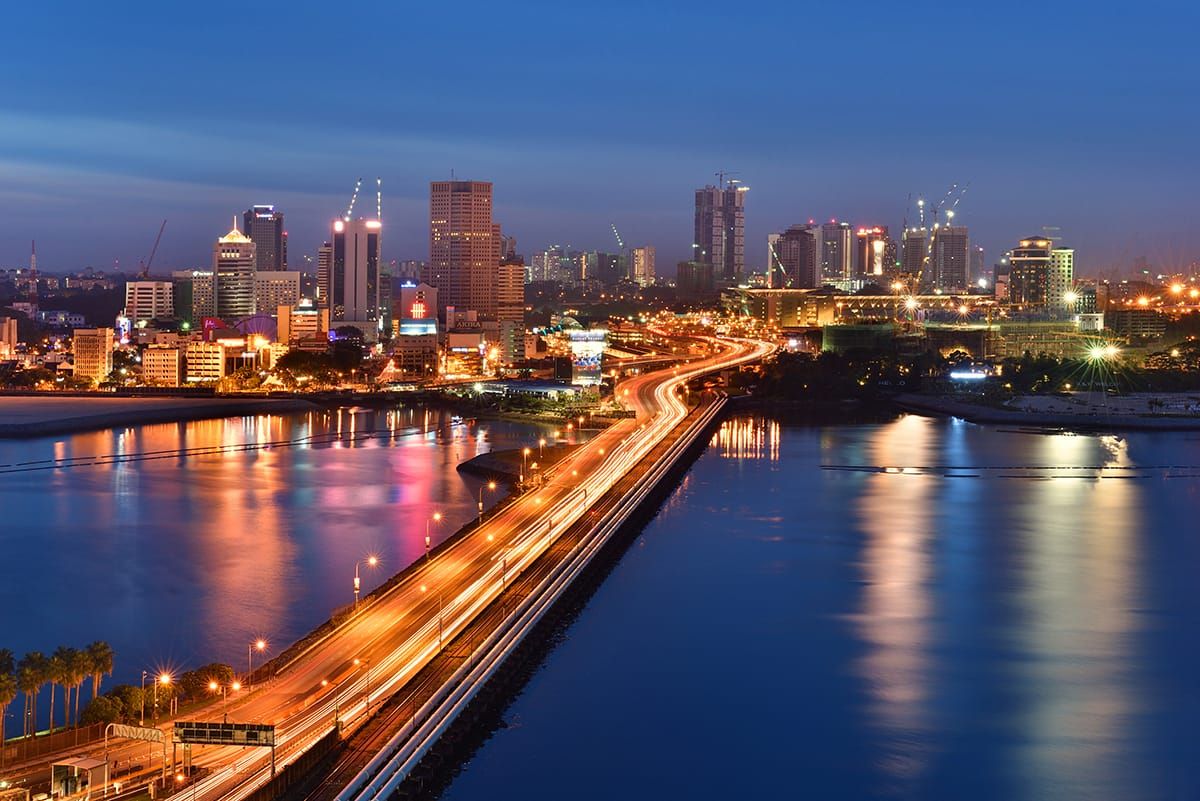
Every year, Johor's biggest story gets told in the wrong language.
Investment summits quote GDP targets. Infrastructure reports cite port tonnage. Policy documents outline Special Economic Zone frameworks. All of it accurate. Most of it unread by the people it should reach.
While the world watched Dubai rise from desert sand, a quieter transformation has been unfolding at the southern tip of the Malay Peninsula. In January 2025, two prime ministers signed an agreement that quietly rearranged the map of Southeast Asian commerce. The Johor–Singapore Special Economic Zone — covering 3,500 square kilometres, five times the size of Singapore — was formally born.
The Wrong Comparison
The official language around Johor's ambition has centred on a single metaphor: "the Shenzhen of Southeast Asia." It is an understandable shorthand. But it is the wrong ceiling.
Shenzhen's model is built on sweat — on the relentless accumulation of manufacturing capacity, on cost advantages that erode as wages rise. Johor's opportunity is categorically different. It is not a cost play. It is a lifestyle and capital play. That is the Dubai model.
The Numbers Are Real
In Q1 2025 alone, Johor recorded RM 30.1 billion in approved investments — a 634% increase year-on-year. The JS-SEZ target: GDP of RM 260 billion by 2030, double current levels. Port Tanjung Pelepas, 30 kilometres from Johor Bahru, is the world's 15th busiest container port and 5th most efficient. Maersk has designated it as its primary Asian transshipment hub.
The Singapore Factor
Dubai had to build its own hub. Johor already has one next door. Singapore's Changi Airport connects to 100 countries. Singapore's legal system is among the world's most reliable for contract enforcement. The Johor Bahru–Singapore Rapid Transit System opens in late 2026, carrying 10,000 passengers per hour.
What Nature Gave Johor That Money Cannot Buy
In October 2024, Chiang Mai experienced its worst flooding in fifty years. Losses exceeded 60 billion baht. 100,000 people were evacuated. The cause: a bowl-shaped geography that funnels monsoon water directly into a dense urban core. The problem is not fixable with infrastructure alone. It is geography.
Johor does not have this problem. The island of Sumatra absorbs the primary force of Indian Ocean tsunamis. Johor lies below the principal typhoon generation belt. It has not experienced a direct typhoon strike in recorded modern history.
Dubai spent thirty years building what Johor's geography gave freely. The question is whether Johor will claim it.
The Royal Dimension
Johor's Regent, Tunku Mahkota Ismail, is not a ceremonial figure. He is the founder of Johor Darul Ta'zim — JDT — the football club that has won the Malaysian Super League for twelve consecutive years. He built a stadium to international standards when neighbours questioned the investment. JDT wins, consistently.
"JDT is more than a football club," the Regent has said. "It is the heartbeat of a new Empire." The Bangsa Johor identity — a civic nationalism that crosses ethnic lines — is something Dubai and Shenzhen had to construct laboriously through policy. In Johor, it is lived reality.
Forest City: The Story The World Got Wrong
When Palm Jumeirah was announced in 2001, international media called it madness. Today it commands $30,000 per square metre. Forest City was not built too soon. The world simply has not caught up yet.
The global population of high-net-worth digital professionals — people whose work requires nothing more than a reliable internet connection — is estimated at over 35 million and growing at 22% annually. Forest City, properly repositioned, meets every criterion: political stability, natural environment, Singapore's Changi 40 minutes away, apartments three times the size of what the same money buys in Singapore.
The Question Is Not Whether
The trajectory is not inevitable. But the old narrative — Johor as Singapore's shadow, as an almost-place — is finished. Something new is being built here. And the people building it know exactly what it should become.
By 2030, when people say "the Dubai of Asia," they will mean Johor.